
How We Process Our Honey
August 14, 2021
The Last Sip of Fall Nectar
October 5, 2021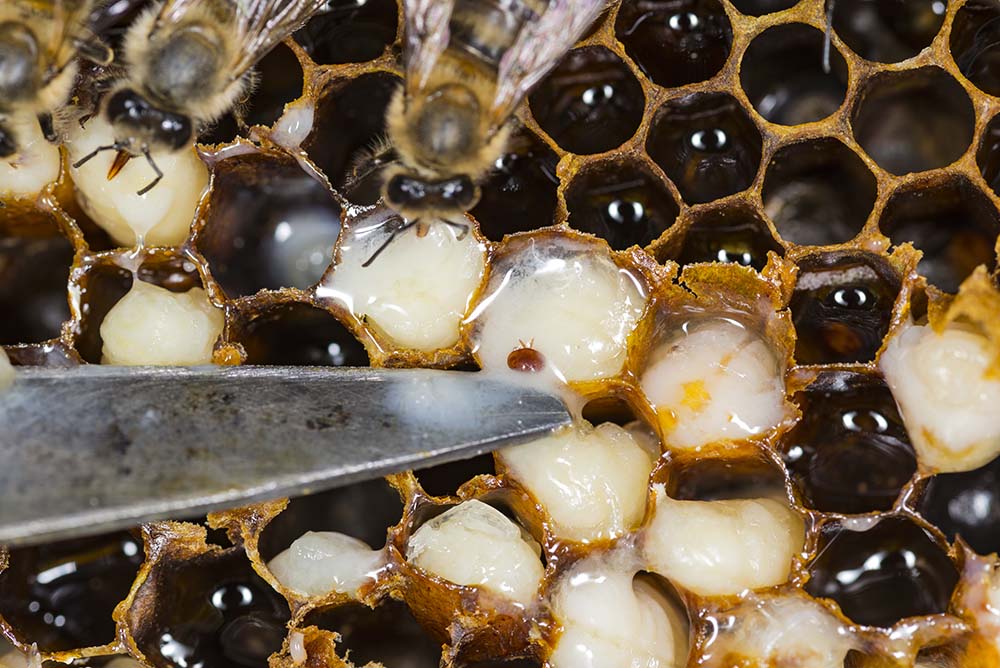
Varroa mites are a parasitic pest of honeybees and create a “world of woes” for beekeepers worldwide. They  developed in Indonesia – where they only reproduced in drone brood and did little damage to the bee colony as a whole. In other parts of the world, Varroa has had a devastating effect on Apis Mellifera (our European Honeybee). The reddish mites are small but visible to the naked eye. They suck the blood (hemolymph) from adult bees and feed off of brood. In addition to weakening the bees, the mite also serves are a vector for viruses. There is no treatment for a virus. Our best plan of management is to keep the “mite load” low so we will have the largest number of healthy bees possible.
August is the time of year when varroa mite numbers start to explode in our area. Also, the queen bees may slow or stop laying eggs and the result is a lower number of bees and more mites. Hot daily temperatures in August causes many beekeepers to be less than vigilant in monitoring their hive and the total collapse of the colony may be the result. There are many resources online regarding how to take a “mite count” and how many are too many. Sometimes these sources disagree but the general consensus is that if you do a “sticky board count” you don’t want more than 50 mites dropped in a 24 hour period in August.
Once you have an idea of how infested your colony may be, you need to decide on a treatment option. Bee Well Honey has several products available for mite control. Ranging from a synthetic chemical (such as Apistan) to the “softer” more natural options such as “thymol” or “mite away”. Beekeepers have wonderful arguments over the best treatment method but there seems to be no silver bullet for varroa. Each product has directions on the package. Be sure to read and follow directions in regards to placement and removal of strips and temperature restrictions.
Managing varroa levels now will help insure that you have healthier bees in September that will be able to raise healthy over-winter bees.
Don’t delay – send mites away !