
Beekeeping Tips for September
August 31, 2026
Sauteed Sliced Cabbage and Smoked Sausage With Honey
September 28, 2026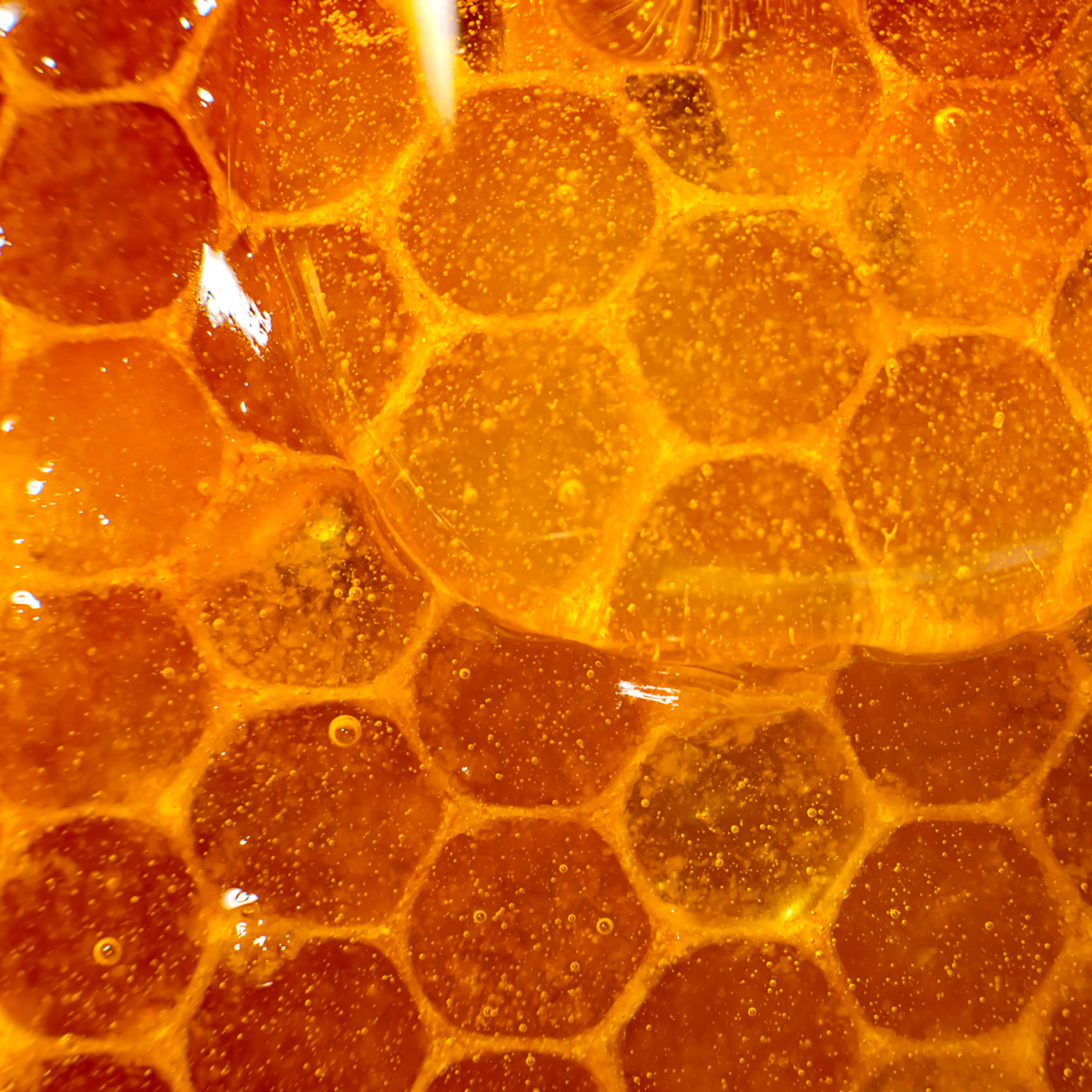
When most people picture a honeycomb, they picture the familiar pattern of perfectly connected six-sided cells. It looks almost too precise to be made by insects—like nature’s own tiny architectural masterpiece.
But here is the surprising part: honeycomb cells do not begin as hexagons.
Honey bees initially create their wax cells in a more rounded, tube-like shape. Worker bees produce beeswax from glands on their abdomens, then chew and shape it to build the comb that will eventually hold honey, pollen, and developing bees.
Inside a busy hive, temperatures are kept very warm—typically around 95°F. That warmth softens the fresh beeswax just enough for the rounded cells to gently press against one another. As the wax settles, the walls naturally meet in the most efficient shape possible: the hexagon.
Why hexagons? This six-sided design gives bees an incredible amount of storage space while using as little wax as possible. It is strong, compact, and allows each cell to share walls with the cells beside it. For a hive that depends on conserving energy and wax, it is a remarkably smart design.
So, while bees certainly do the hard work of producing and building with wax, the warm conditions of the hive help complete the honeycomb’s famous shape. It is one more example of the fascinating teamwork between bees and the natural world around them.
The next time you see a piece of local honeycomb, take a closer look. Those beautiful hexagons are more than just a pretty pattern—they are part of an efficient, living home built by thousands of hardworking honey bees.
Visit Bee Well Honey Farm at 909 W. Main Street in Pickens to discover more about honey bees, local honey, and the amazing work happening inside the hive. 🐝🍯