
Varroa Mites and Bees
August 16, 2021
The Beekeeper’s Fall
October 13, 2021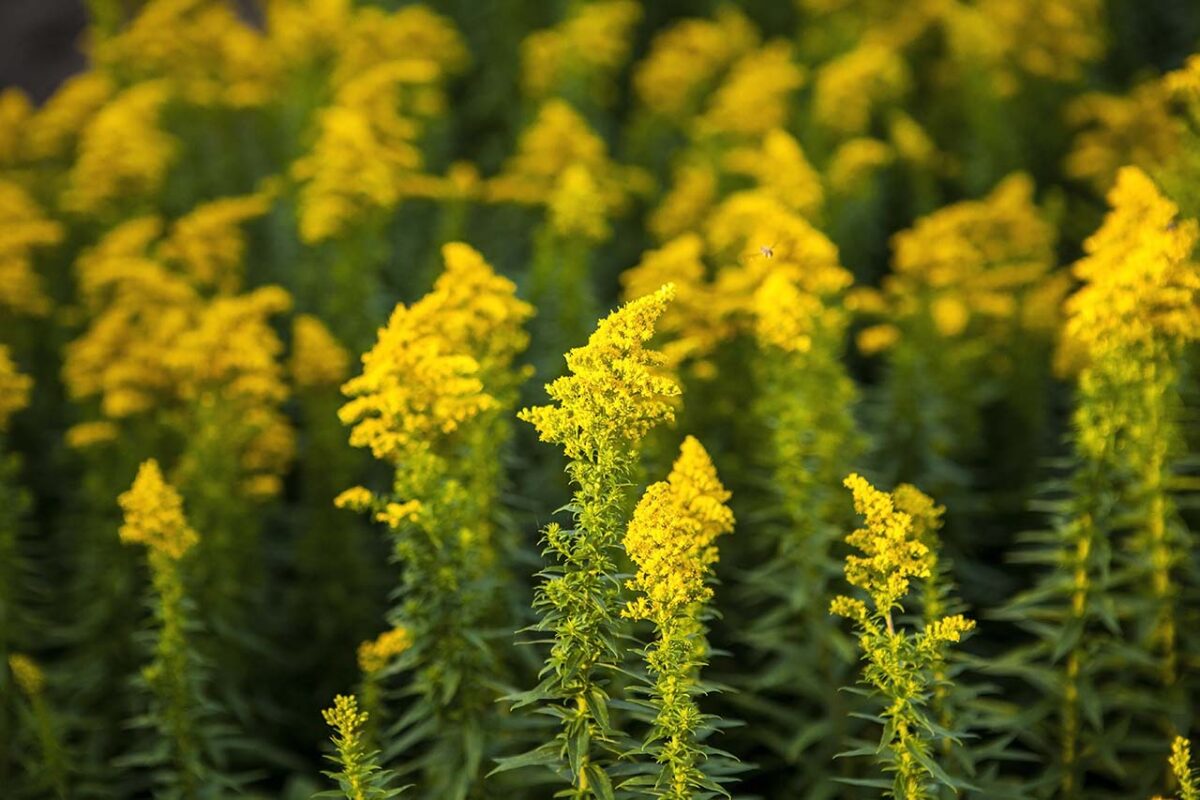
Our honeybees are off across the hills enjoying the last bit of nectar before winter. The shortening daylight hours and the cool night temps are signaling the end of the harvest season for beekeepers everywhere. Honeybees will not be able to collect nectar during the cold winter months even though they may fly out on warm days. They must have sufficient stored honey and pollen to meet their needs until the first blossoms of late winter/early spring. The fall flow in our area will sometimes result in a small amount of honey for the beekeeper but it is usually reserved for adding to the bees winter storage.
The Fall Flow (if you are lucky enough to have one in your area) will consist of many flowers – some of which are not very noticeable. One of the most showy is the Goldenrod. There are different types of  Goldenrod and the amount of nectar they secrete will vary between types and weather conditions. Remember, just because you see a beautiful bloom does not guarantee a good fall nectar flow. Observing Goldenrod in bloom in a field or along the roadside, you will notice not only honeybees but also many different types of wasps, bumblebees and other pollinators. All of these insects are enjoying the last nectar and pollen of the season. The honeybees will hopefully overwinter as a group in their hive and the reproductive “queen” wasps and bumblebees will hibernate and start a new family group next Spring.

Sawtooth Sunflower blooms from mid-August to late October in moist areas and partial shade. This plant is good for bees and serves as browse for deer also.
Aromatic Aster (above right) is a small plant you will find from mid-September to November in sunny fields and woodland edges. Several different types of Aster contribute to our bees needs and provide nectar until a deep freeze.
One of the most important tasks for a beekeeper is to make sure their managed bee colony has sufficient winter food before cold weather begins. Once a deep freeze has killed all the available blooms, the bees will only find a few sheltered blossoms until the first dandelions of Spring.